maj7 Piano Chords
Maj7 keeps the major triad and adds the note one semitone below the octave root. That single note separates Cmaj7 from both C and C7.
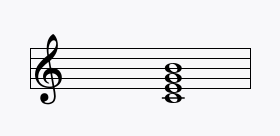
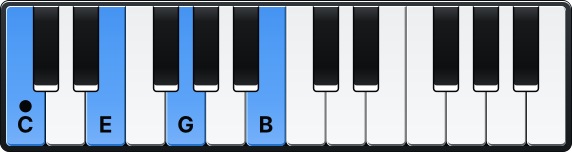
Maj7 structure, shown with C
Cmaj7 is C–E–G–B: a C major triad plus the major seventh B. B lies one semitone below the octave C, creating the close interval that distinguishes Maj7 from both C and C7.
What Maj7 quality means
In jazz and popular music, the major seventh often remains as part of the chord rather than resolving immediately to the octave root.
Maj7 in harmonic context
The same Cmaj7 chord can be the tonic in C major or IVmaj7 in G major.
Hear the added major seventh
Cmaj7 → C7
- Common tones
- C · E · G
- Moving voice
- B → B♭
B moves down a semitone to B♭, while C and E and G remain as common tones.
Maj7 chord symbols
Cmaj7, Cma7 and CΔ7 are common spellings. Cmaj7 contains B natural; C7 contains B♭ and has a different quality and usual behavior.
Voicing the semitone
B and the octave C are a semitone apart. Spreading them across registers weakens that clash; placing them together makes the semitone easier to hear.